Inspect the empty cupboard
Remove the products and look at the cupboard base in good light. Persistent dampness, a dripping connection or swollen board needs attention before organisers go back in. A waterproof liner may make a small spill easier to clean, but it does not repair a leak and should never disguise damage.
Photograph or sketch the position of the pipework and valves. You should be able to reach them without dismantling shelving. Measure the room needed by doors and hinges as they close, too. A container can fit inside the cabinet yet still obstruct the door's movement.
Use the space on either side
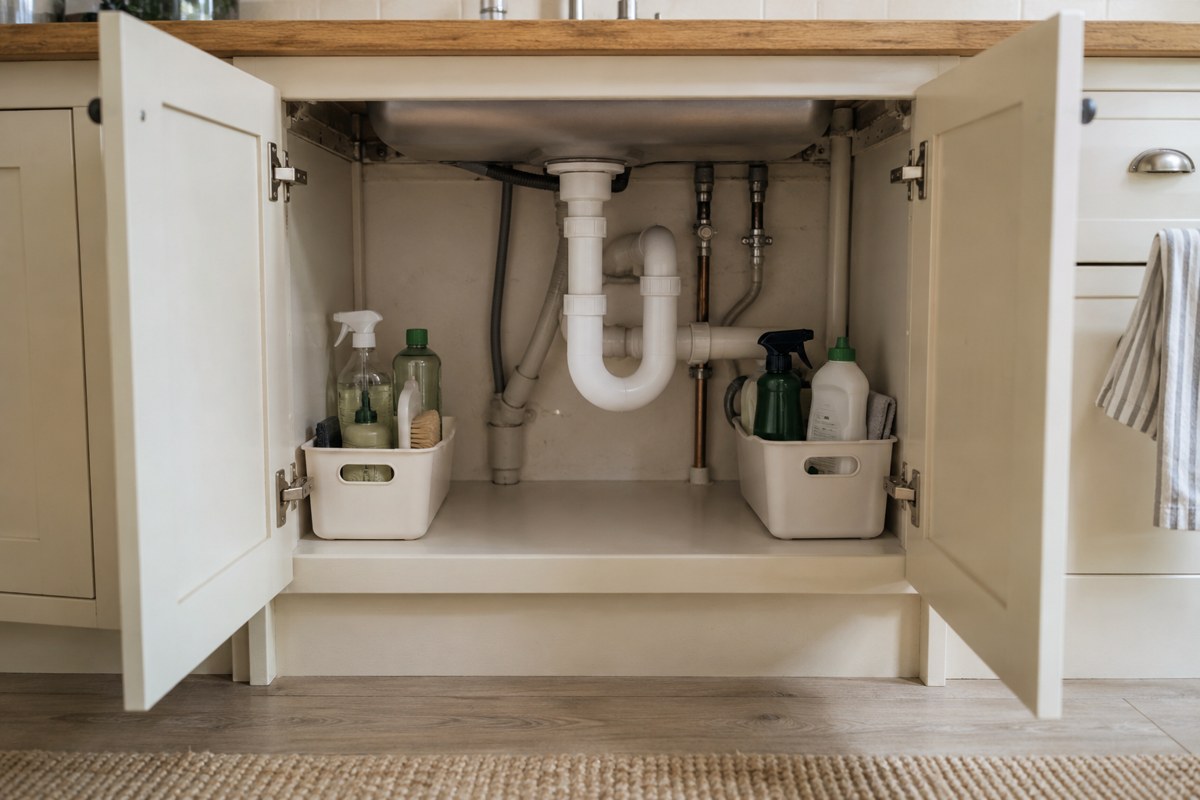
Two small baskets often adapt better than one enormous box. Take out the everyday basket in one movement while leaving refills in another. Choose handles that are comfortable to grip and cannot catch the trap. Test the entire removal route before filling the containers with heavy bottles.
Do not rest shelves on pipes or hang storage from them. An adjustable organiser should support itself as its manufacturer intends and leave connections visible for inspection. Keep the centre clear if that is where the plumbing sits, even when the resulting arrangement looks less symmetrical than expected.
Keep the original containers
Cleaning products need their original labels and instructions. An unmarked decorative bottle can be mistaken for something else and removes information that matters. Keep cleaners separate from food, kitchen utensils and pet supplies. This cupboard is not an appropriate place for potatoes beside the detergent.
Where children live or visit, use an appropriate child-resistant cupboard latch and store hazardous products out of reach. A closed low door is not sufficient protection. Keep containers upright and follow each label's storage conditions, even if a particular product needs a different location. Avoid decanting partly used bottles just to make everything match.
Leave room to check underneath
During a regular cupboard clean, remove the baskets and inspect the base and visible connections. Do not build up so many reserve products that you lose track of them. One replacement bottle of something you actually use is easier to manage than a collection bought just in case.
Further reading: