Inspect the floor it will cover
Notice whether puddles remain after rain and locate the drainage outlets. A rug cannot correct a problematic slope or a leak. Do not cover access points or drains to create a visually continuous floor, because those areas still need to remain accessible.
Check that the flooring is compatible with the rug backing and any non-slip underlay. Some combinations can leave marks or hold moisture. Where there is a particular waterproofing system or finish, follow its instructions rather than attaching tape or other components without checking first.
Read what outdoor use means
An outdoor label describes intended conditions, not a promise that drying will never be necessary. Look for cleaning, storage and exposure instructions. A covered terrace and a completely exposed balcony do not subject a textile to identical wear.
Consider the size and weight when wet as well. If there is nowhere you can lift and dry it, a smaller rug or no rug may be more practical. Ordinary maintenance should be possible without hanging a heavy item over the railing or disturbing other households below.
Test doors, chairs and edges
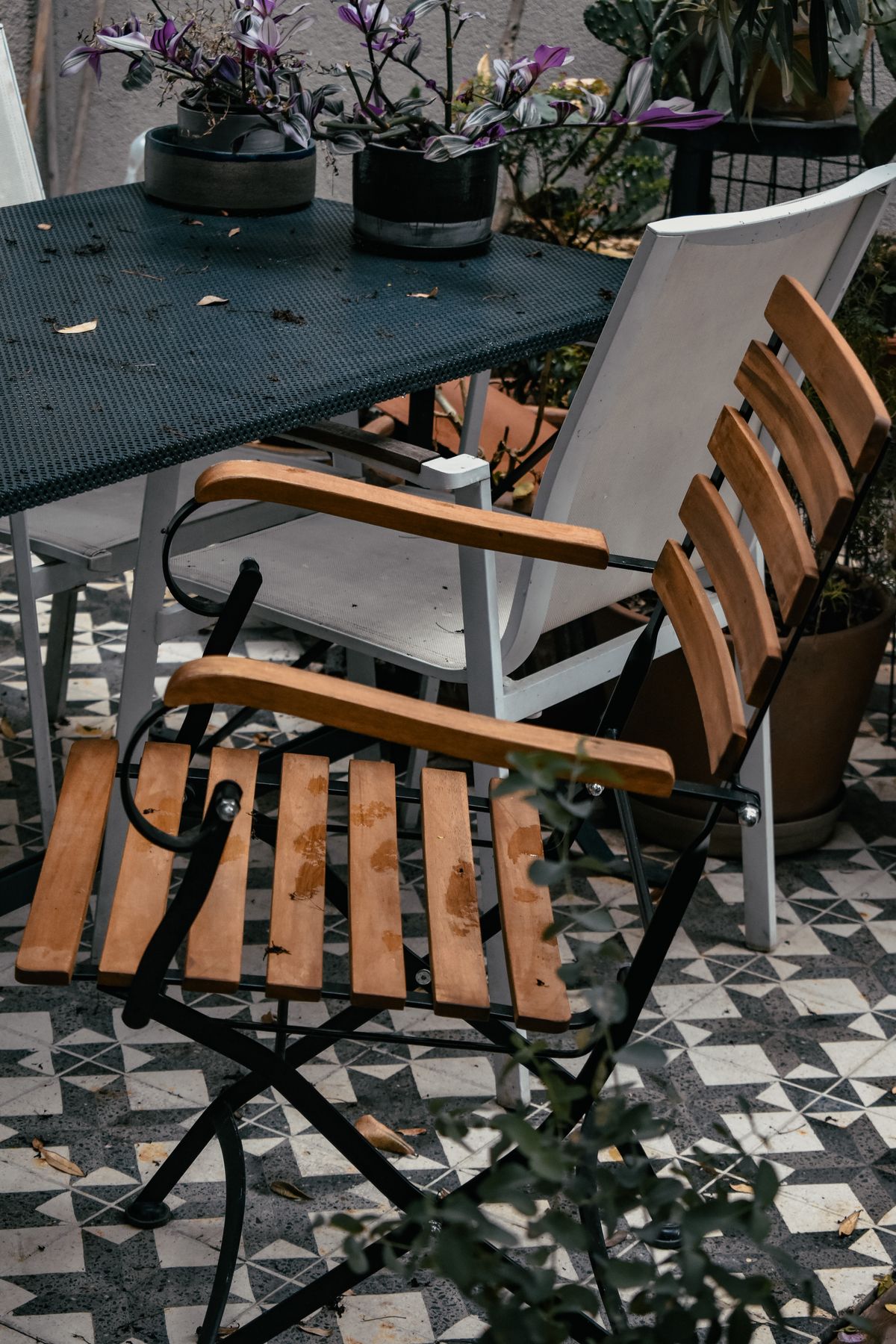
Open the door across the proposed area and check that it does not scrape or bunch the fabric. Put a chair on it and move the chair as you would when standing. An edge directly under the chair legs can be awkward, while a turned-up corner becomes an obstacle in a narrow route.
Do not rely on furniture as an improvised restraint for a rug that wind keeps moving. Follow an appropriate arrangement permitted by the manufacturer and building, and remove the rug when conditions are unsuitable. Keep the route indoors clear throughout.
Lift it to inspect underneath
Clean both sides as appropriate for the material and periodically check the floor, particularly after rain. Let everything dry fully before storage. If smells or marks appear, address their cause instead of covering the area with another layer.