Measure use, not just the top
Record the available area and mark doors, sideboards and circulation routes. Reproduce a candidate table on the floor with paper or suitable tape. Place real chairs around it, pull them out and sit down. Check whether someone else can pass without asking everyone to stand. Product dimensions describe furniture, not the room needed to serve food, open a nearby drawer or help someone into a seat. Rehearse those specific actions before deciding that the outline fits comfortably in the room.
Leg positions change usable seating
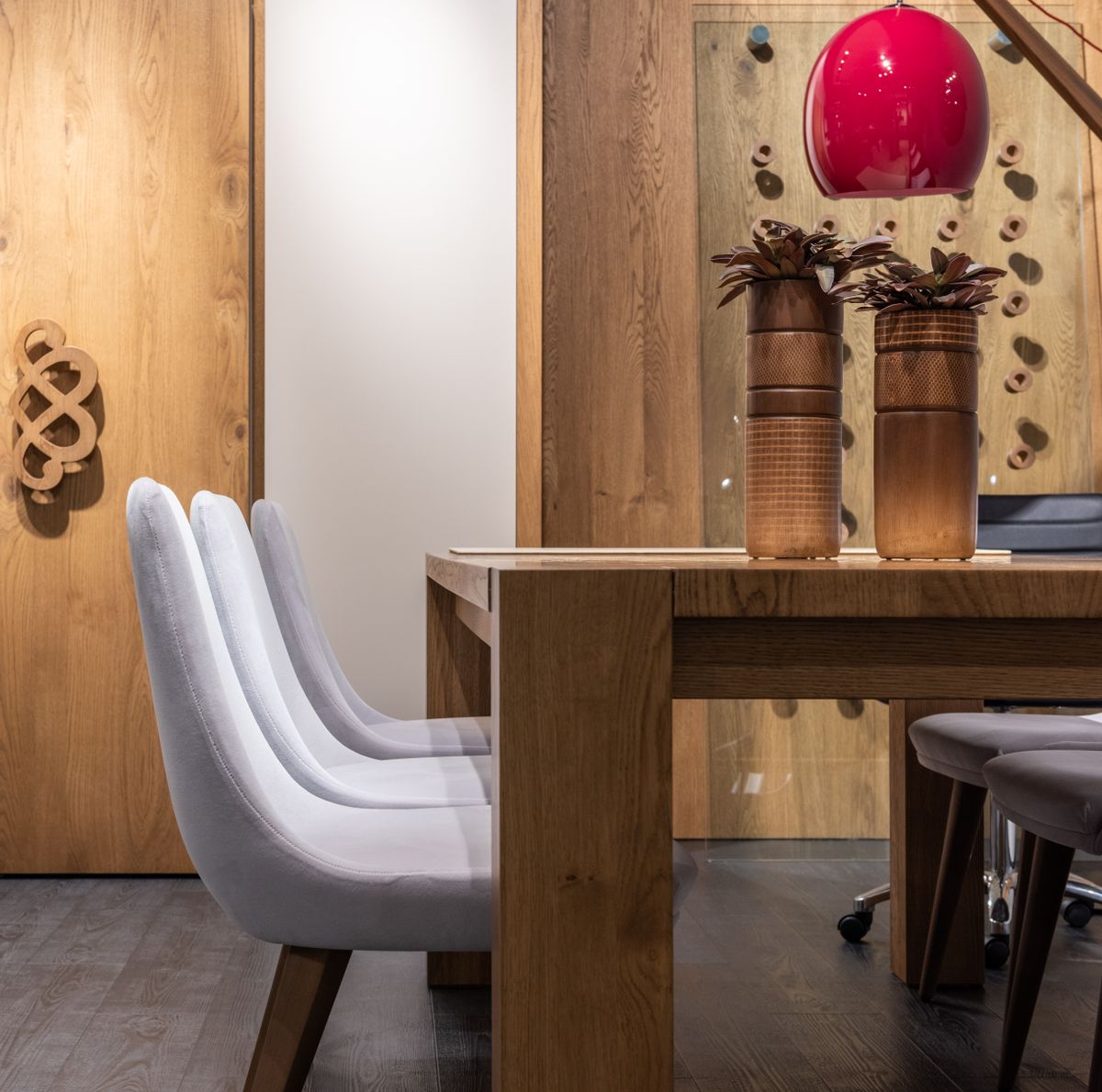
Two equally sized tops can feel different when their legs are arranged differently. Examine the clear width between supports and the space beneath the apron. Arms need to fit underneath if you want chairs tucked away. A central pedestal may help some seating positions while occupying foot space elsewhere. Do not estimate capacity simply by dividing the perimeter. Use the intended chairs and see where knees land, particularly at corners or beside crossed supports. A seller's seat count is a starting point for checking, not a substitute for it.
Choose for an ordinary day
Consider how many people usually eat there, rather than only the largest annual gathering. An oversized table can make a small room awkward throughout the week. For an extending model, measure both configurations and identify storage for leaves that are not integrated. Check that opening it does not require rearranging half the home. With a fixed table, a round or oval shape may alter circulation, but still needs its own rehearsal. No geometry creates usable space where the room does not provide it.
Include what goes on the table
Try plates, glasses and the serving dishes normally used. If the table doubles as a desk, count the computer and materials but decide where they go at mealtimes. Examine the finish's care requirements for heat, spills and everyday cleaning. A delicate table may suit you if those requirements are acceptable; it is not an advantage if they prevent normal use. Finally check delivery access and assembly. The right dimensions should serve both the room and the way people actually eat in it.