Measure the usable opening
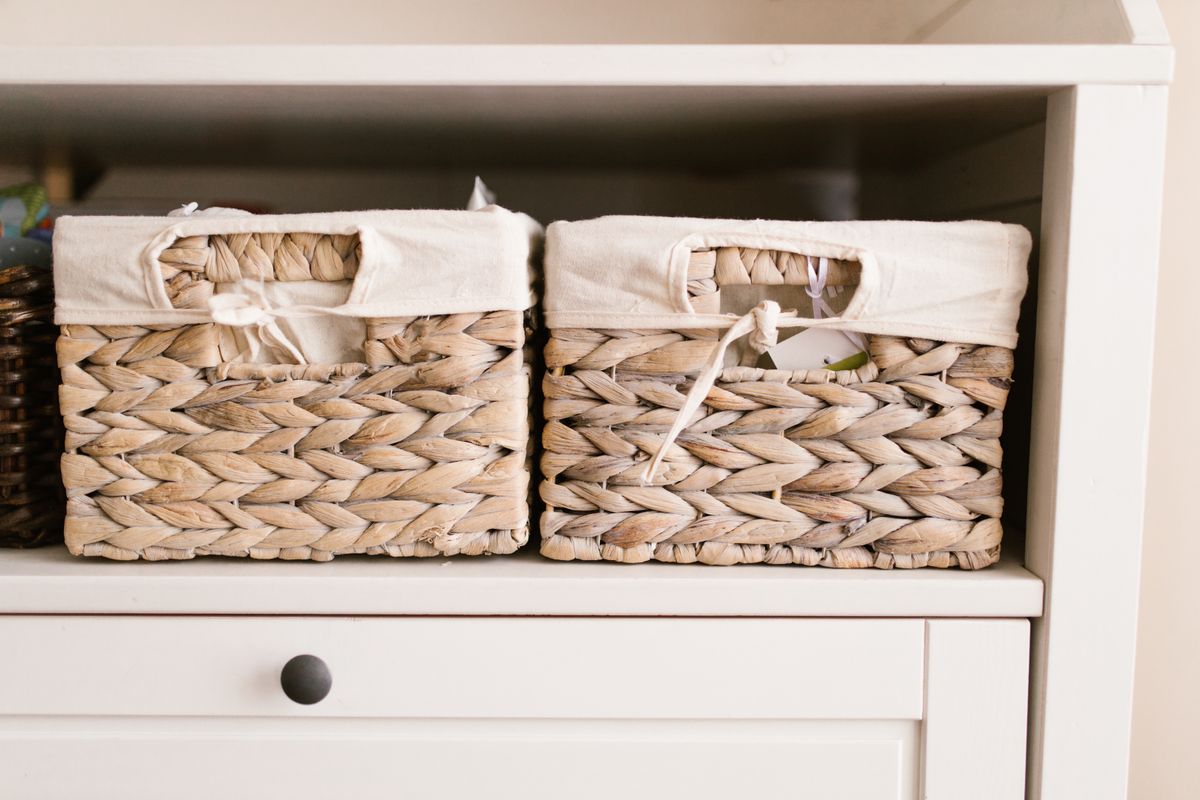
Take internal width, depth and height, subtracting hinges, supports and front edges. Check whether a door narrows the opening despite a generous interior. Leave room to grip and lift the box without scraping the shelf above. For a lidded container, decide whether it will be opened in place or removed completely. External dimensions determine the fit; internal dimensions determine what goes inside. Thick walls can leave considerably less capacity than the outside shape suggests, particularly with small containers intended for tightly packed cupboards.
Group belongings before sizing
Gather the items that will share the box and remove empty packaging or things belonging elsewhere. A huge container can hide small objects and become too heavy when filled. For cables, decide whether chargers should be separated from accessories. For clothing, consider whether one category should be accessible without disturbing the entire stack. Size should respond to a recognisable group. Buying a uniform multipack first often means inventing contents afterwards rather than solving the storage problem that prompted the purchase in the first place.
Rehearse lifting it
Handles, empty weight and rigidity change how comfortable a container is to use. A soft box may sag under heavy contents, while a large rigid one can be awkward to retrieve overhead. Keep heavy items accessible and respect the furniture's load rating. Do not add tall boxes above shelving simply to use spare height without considering stability and required anchoring. Where contents need to be visible, a window or clear label may be more useful than removing the whole box whenever something is needed.
Try one working example
Before equipping several shelves, test one unit or reproduce its dimensions in cardboard. Fill it with the intended belongings and use it for a few days. Check the advertised stacking arrangement, extra clearance needed by the lid and compatibility of replacement pieces. A photograph of someone else's cupboard cannot establish these things for yours. Keep the reference when it works, but avoid buying unnecessary reserves: belongings change, and occupying every spare space with empty containers is not automatically an improvement in household organisation.
Further reading: