Make an inventory with dimensions
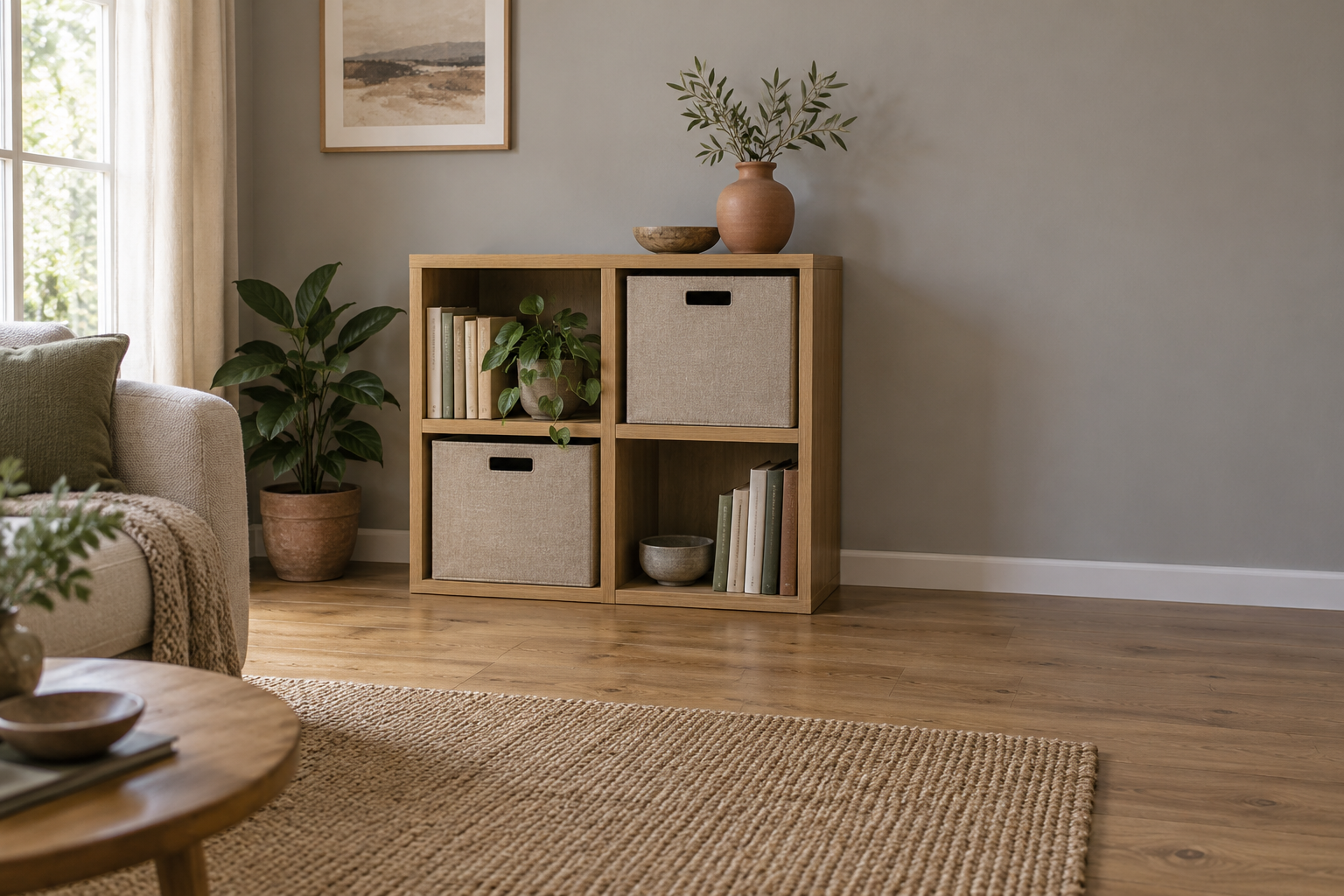
Group items by use and measure the largest, heaviest or most awkward. Decide what should remain visible and what needs a door or drawer. Identical cubes may suit some possessions while wasting space around others. Draw a modest first arrangement and allow room to retrieve things. Do not fill the entire wall simply because the system makes it possible. Access to sockets, windows and cleaning areas still matters, as does the option to change the room's use without dismantling an oversized storage installation.
Check exact compatibility
Parts from one brand are not necessarily interchangeable between ranges or generations. Verify references, depth and connecting hardware. Ask which accessories each module includes and which are separate purchases. Keep the assembly drawing and final dimensions, counting feet, plinths and doors. If expansion is planned, ask about availability without assuming a finish will exist indefinitely. The present configuration should function independently even if the additional units imagined for later are never purchased. Future flexibility is helpful, but should not leave today's furniture incomplete or inconvenient.
Plan loads and restraints
Read limits for individual shelves and the whole assembly, along with connection and anchoring conditions. Do not stack units that were not designed for stacking. Modularity does not remove the need for stability or make every wall a suitable support. Where fixing is required, use the specified arrangement and wall-appropriate hardware, obtaining help when needed. Keep heavy loads accessible. An asymmetric composition may look attractive but must follow instructions just as closely as a straightforward row of identical modules. Appearance cannot substitute for the required installation.
Buy in stages for a reason
Use the first section with actual belongings before adding more. You may discover that one extra shelf solves the problem better than another complete unit, or that a door slows access to daily items. Include assembly, transport and auxiliary components in the cost. Avoid promotional accessories that serve no purpose. Review the arrangement after use: the system should make putting things away and finding them easier, not turn the upkeep of a wall full of compartments into another unfinished household task.
Further reading: