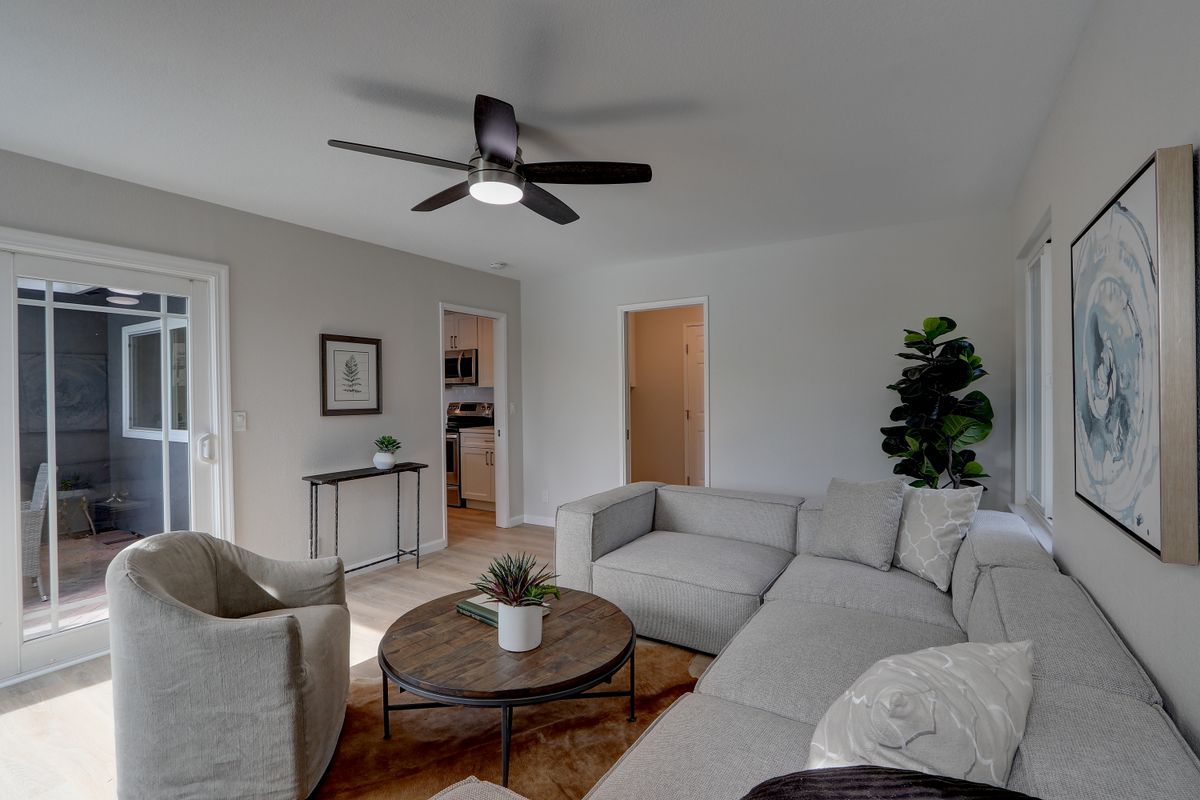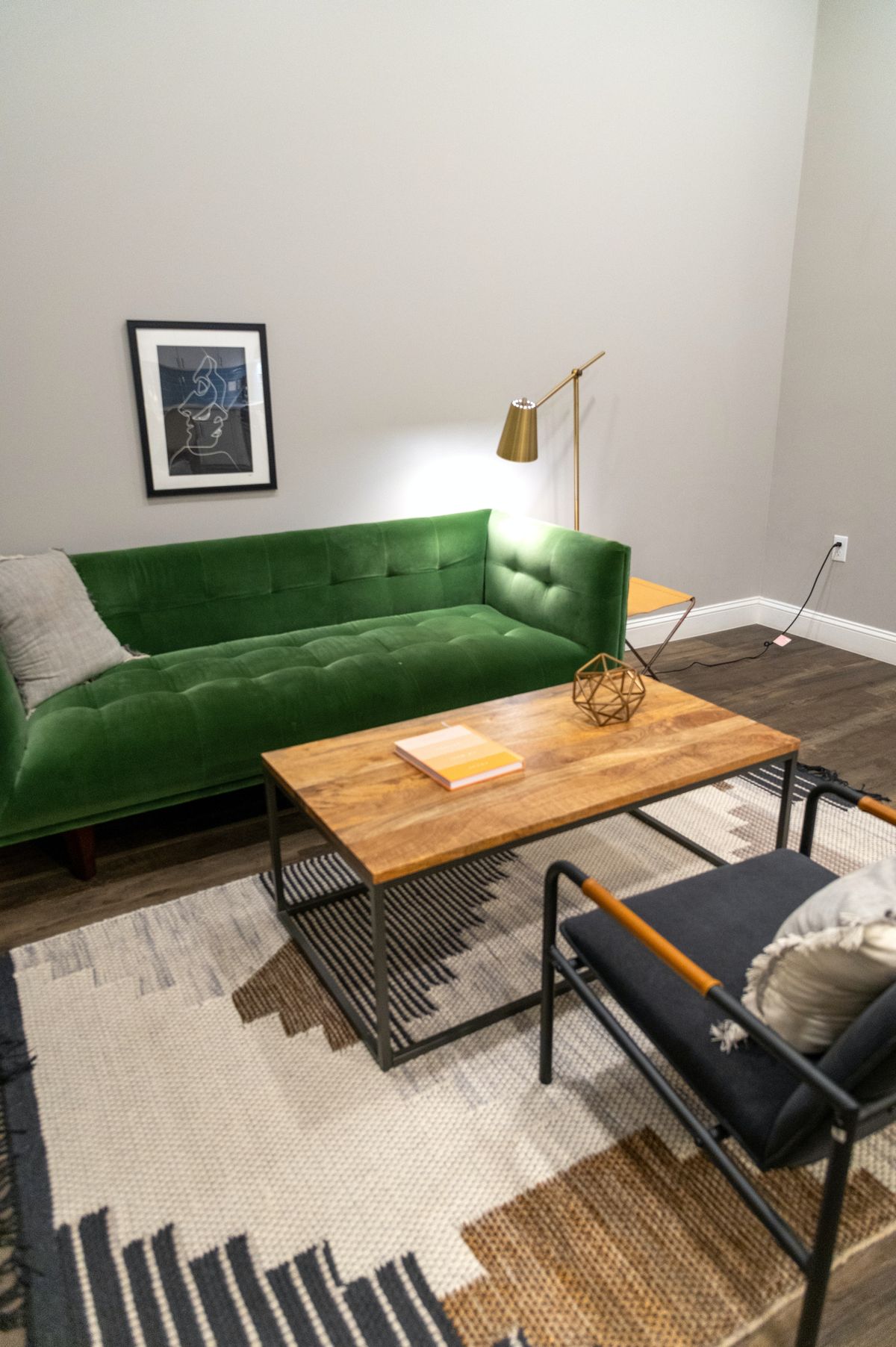
Check why it is empty
Watch the corner during an ordinary day. It may look available with the door closed and disappear when it opens. A radiator, vent or socket may also need to stay accessible. Measure the usable space after allowing for those conditions.
Look upward as well as at the floor. A floor lamp may fit at its base but interfere with an inward-opening window. A plant may need more light or room as it grows. Do not judge suitability solely by the footprint of a pot or stand.
Give it one definite job
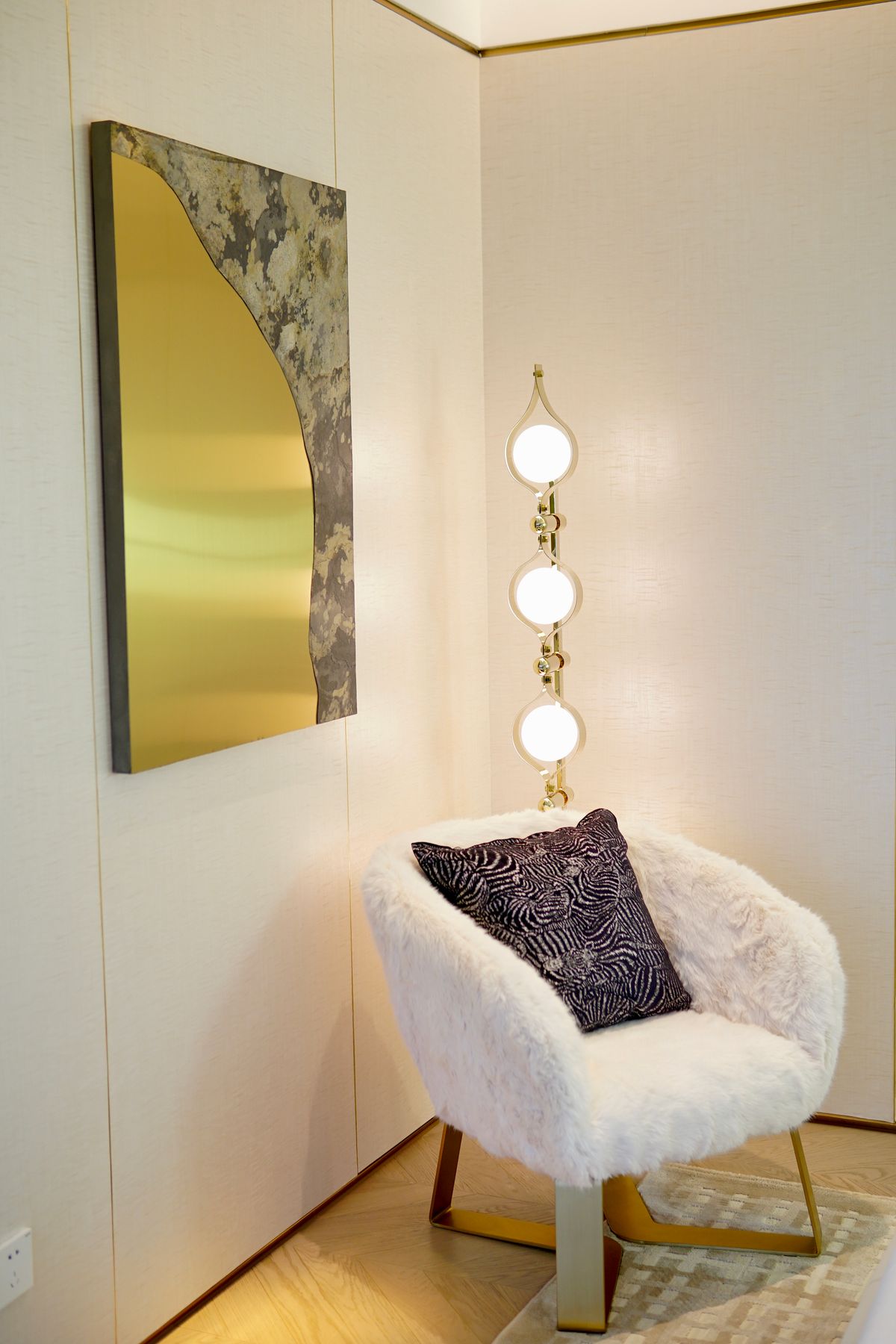
If you need a reading spot, test a seat with lighting and somewhere to put a book. If the missing function is a place to set down a bag, a small bench may be more useful. Avoid combining both jobs and extra storage when the corner can comfortably support only one.
Try furniture you already own first. Leave it there for a few days and see whether anyone uses it. If it becomes a clothing pile, decide whether that reveals a storage need or an impractical location for the intended activity.
Leave room around the object
A piece wedged exactly between two walls can look forced. A little visual separation may help, provided it does not reduce necessary walking space. Try a slight angle, then check that corners do not project into the route through the room.
If the corner is dark, do not add a plant chosen only for its outline. Assess its actual light requirements. Pottery, a basket with a clear purpose or no object at all may be more appropriate choices.
Allow a minimal answer
Sometimes hanging a picture or changing the light is enough. You do not need a complete set of chair, table, rug and lamp. Look at the room as a whole: when it already contains many substantial pieces, retaining the gap may improve its balance.
After the trial, remove anything that neither supports an activity nor adds something you enjoy. A well-resolved corner can remain almost empty. What matters is that it stops feeling like an unfinished task.