Begin with an outline
A narrow frame, chair legs or a lamp can draw lines that the eye recognises easily. Try one of these before introducing a large black surface. You can then judge the contrast without changing the room’s entire character.
Notice existing details too: handles, window frames and appliances may already contribute plenty of black. Including them in the composition can prevent unnecessary purchases. You do not need to conceal every functional item to create a coherent room.
Distinguish shine from volume
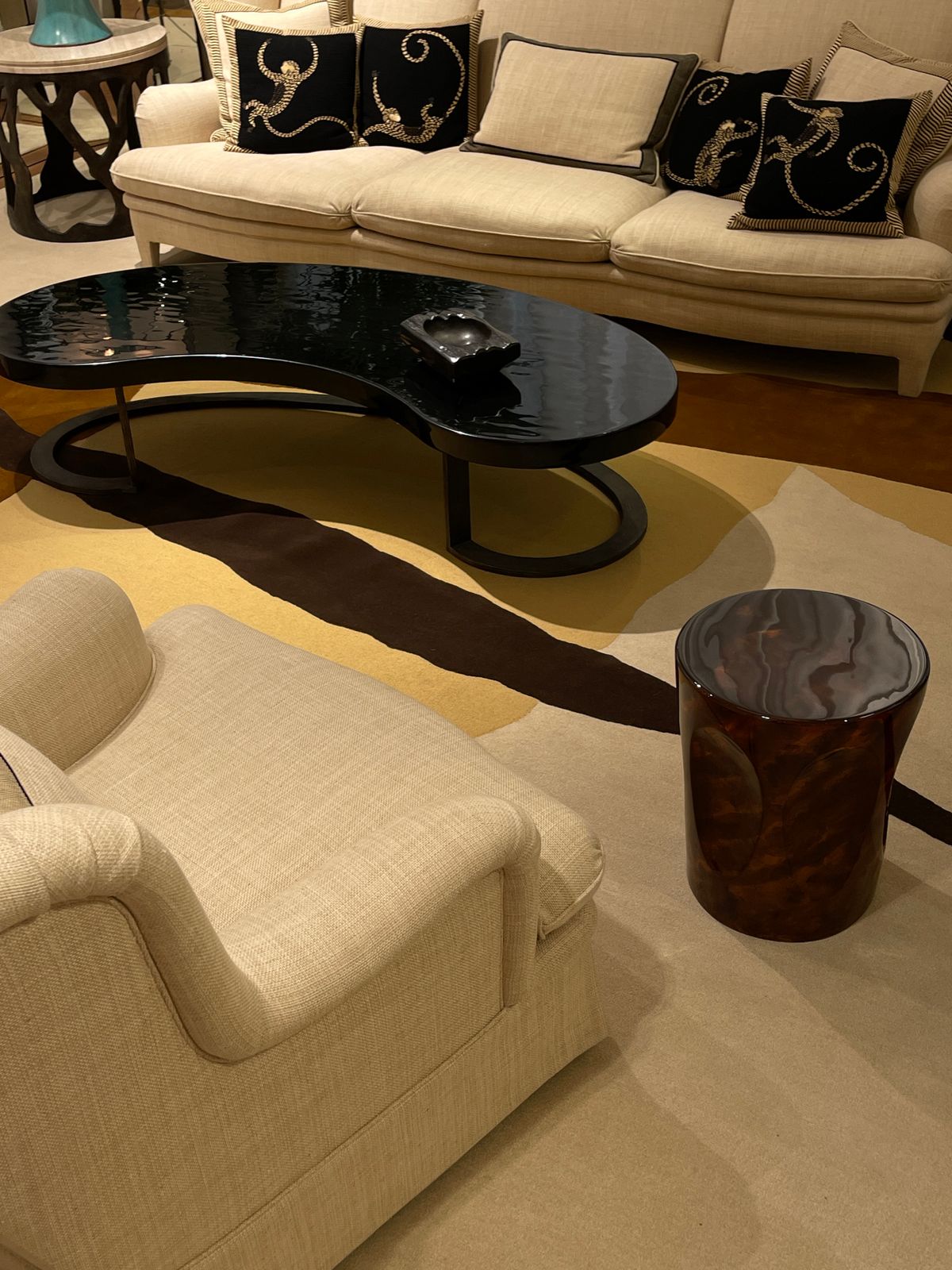
A matt black tray behaves differently from glossy lacquered furniture. Reflections and shadows alter an object’s presence. Look at finishes in the room’s actual light and consider how everyday marks will show.
Even a small object can produce strong contrast against a very pale wall. Distribute visual weight thoughtfully. If one corner feels too intense, try moving the piece before buying another black object for the opposite side merely to balance it.
Pair it with warmer materials
Wood, linen or earth-coloured pottery can soften a white-and-black relationship. These are options rather than compulsory style ingredients. Choose materials that already make sense for how the room is used.
Avoid making every new accessory copy the previous finish exactly. Moderate repetition can connect a scheme, but a collection bought solely because everything is black soon occupies space without adding purpose. Keep some continuous light areas so the contrast remains readable.
Assess from a distance
Look from the doorway and main seat. A detail that seemed small on a table may become the first thing you notice when entering. Decide whether it deserves that prominence or would work better in a quieter position.
Before painting furniture or replacing handles, check compatibility and keep original parts if the change must be reversible. Try movable objects first; a colour decision does not require starting with the most permanent intervention. This also gives you a chance to live with the contrast rather than judging only its first impression.