Position the table first
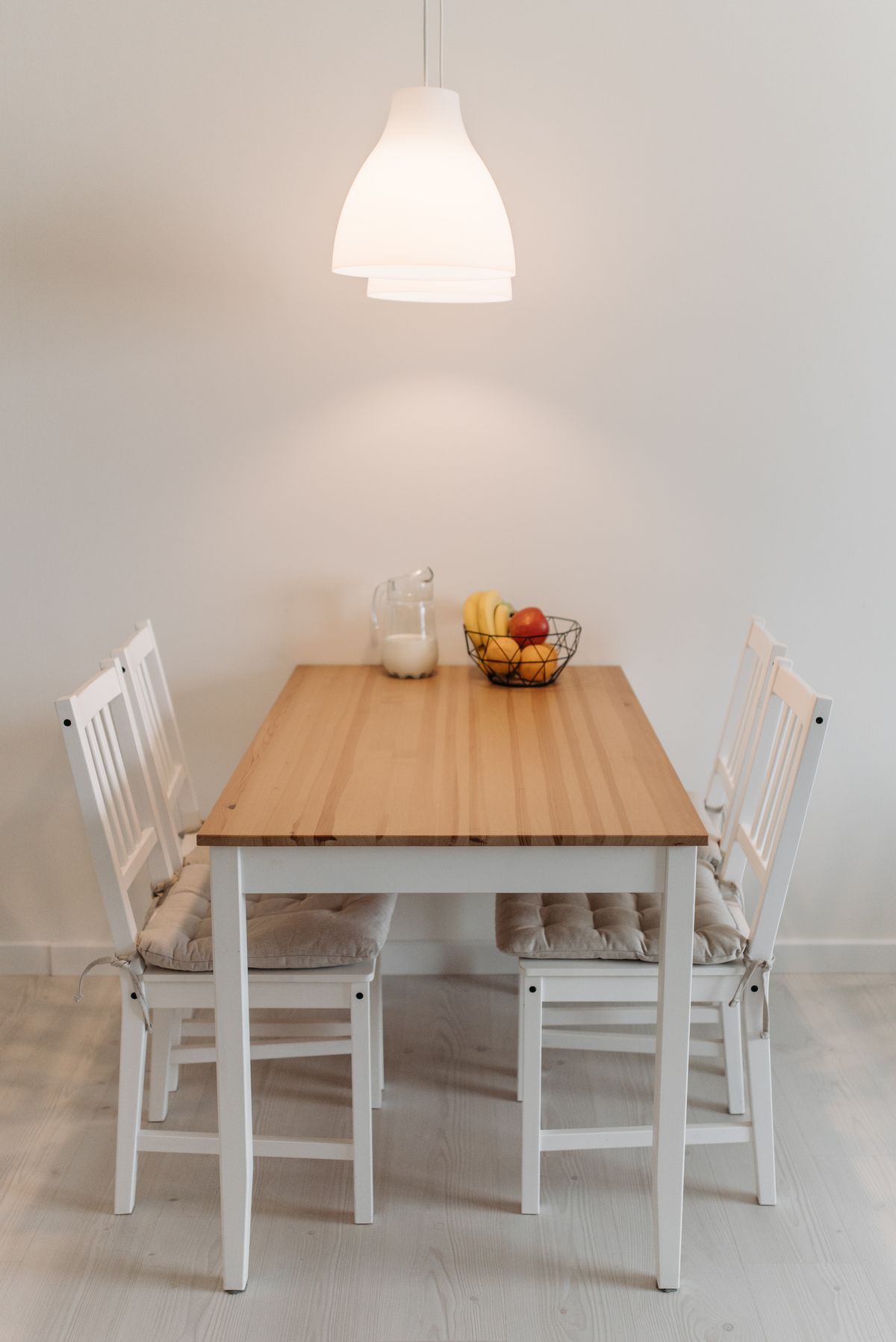
Decide where everyday meals happen and how much room the chairs need to move. If the table shifts when guests visit, distinguish the usual arrangement from the occasional one. A fixed fitting cannot follow every change, so choose the most useful reference point.
Mark the table centre with paper and compare it with the ceiling. It may differ from the geometric centre of the room. If a connection needs moving or a suspension system is required, discuss a suitable solution with a professional rather than placing improvised strain on electrical cable.
Check the sightlines
The height should allow conversation without a shade directly between people’s eyes. Rehearse with a lightweight, safely supported outline, never a heavy object hung from temporary fixings. Sit at different sides and look from the entrance as well.
An opaque shade directs light differently from an open or translucent one. Check whether it illuminates the useful table surface and whether an exposed bulb causes glare. The manufacturer’s recommendations and the particular fitting matter more than a height copied from an unrelated table.
Consider scale and shape
A long table may benefit from an elongated fitting or several sources, while a small table may work with one compact piece. Assess the composition with the chairs present. A visually delicate lamp can occupy considerable volume without looking heavy, but it still needs physical clearance.
If the table extends, test the opened arrangement before buying. The light does not have to trace its entire outline, but the ends should remain usable. Separate ambient lighting can help without making the whole room uniformly bright.
Controls are part of the design
For dimming, check compatibility between the fitting, bulb and dimmer. Read the permitted wattage and bulb specifications. Keep cleaning and replacement access in mind; a hard-to-reach fitting can end up gathering dust directly over the dining surface. Consider how its switch works from the route into the room, too.