Draw the main route
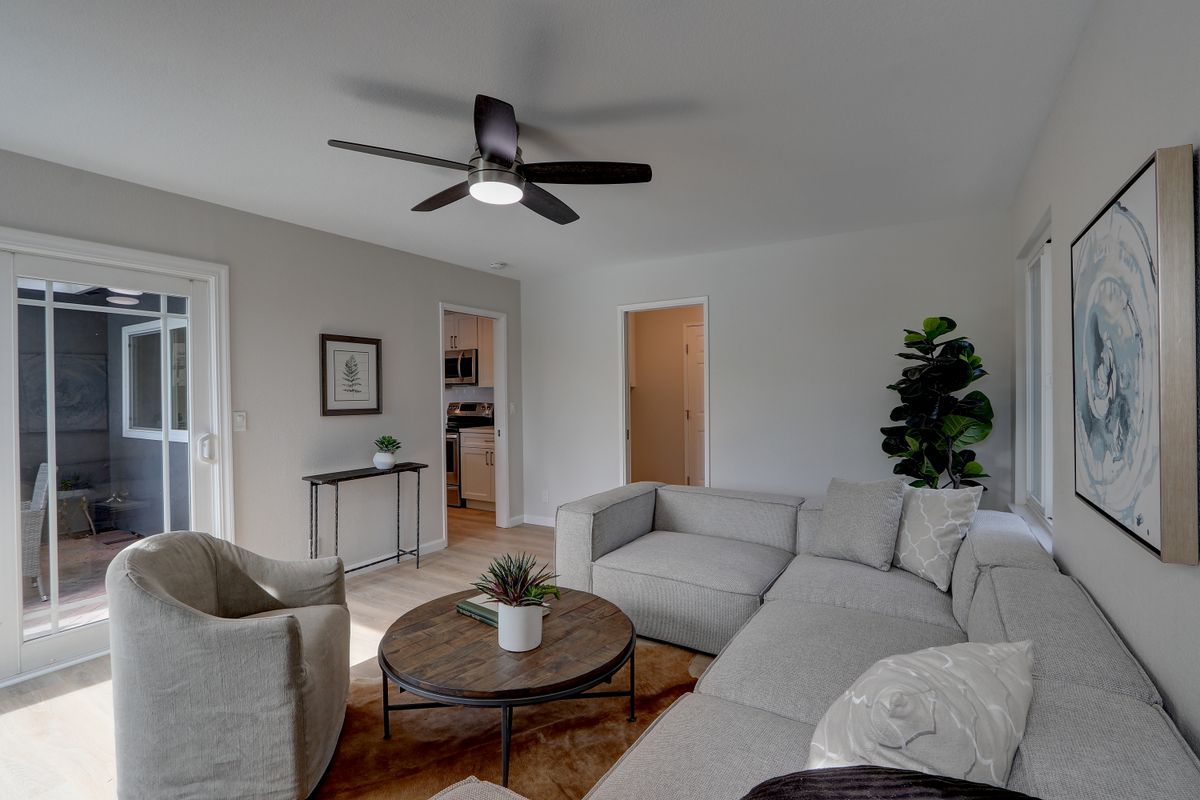
Identify doors and access to windows or a balcony. Walk through as you normally do and decide where circulation belongs. If every journey passes between the sofa and television, moving the seating area may help more than adding furniture along the sides.
Everything does not have to sit against the long walls. A sofa placed away from the wall can define an area, but check its back, the route behind it and any cables. Test that position before buying a console simply to occupy the new gap.
Create two recognisable uses
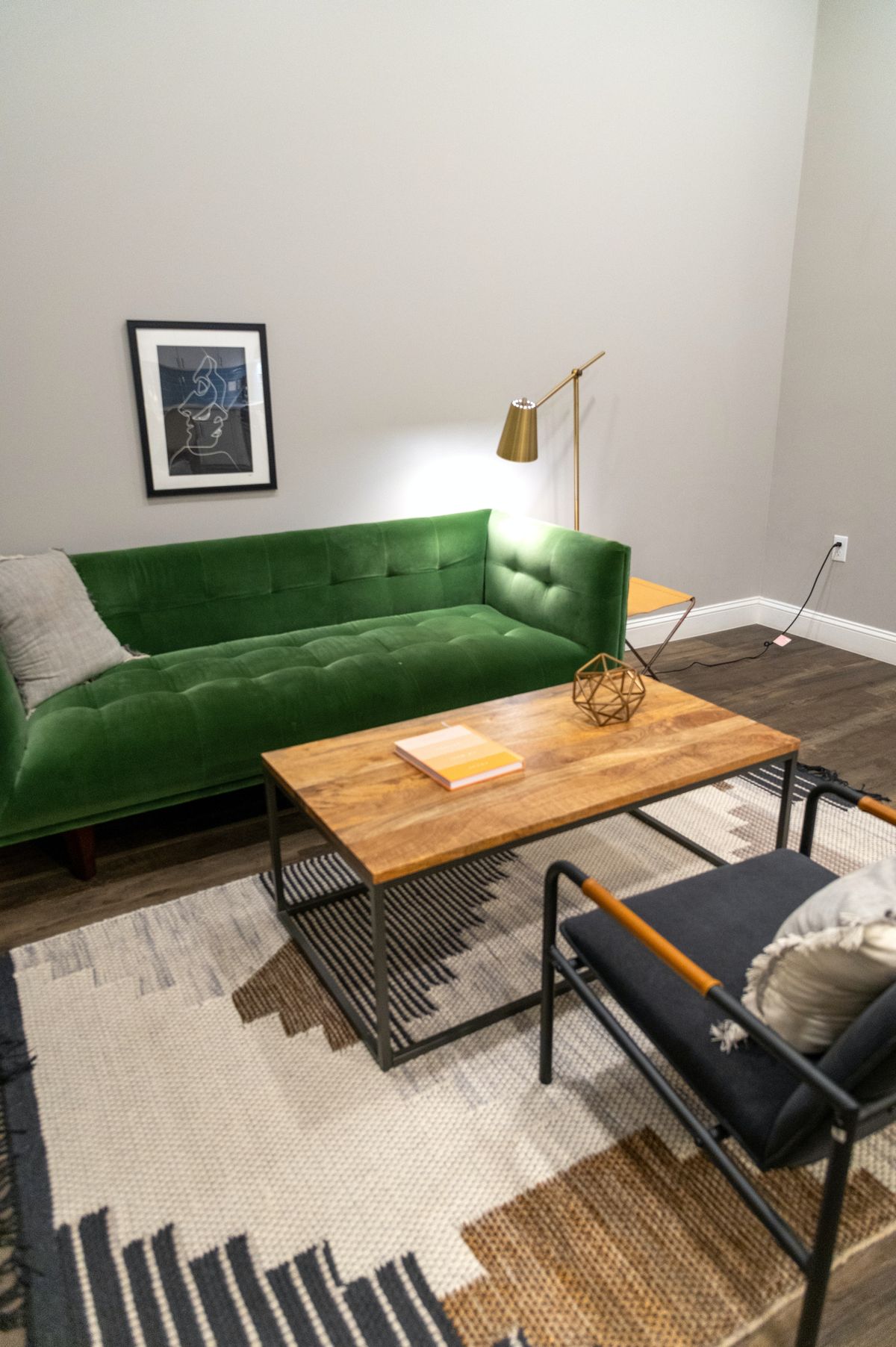
The main area might support conversation, with a secondary reading, working or dining spot. Choose activities you actually need. A well-positioned chair and lamp can establish a corner without creating a physical barrier.
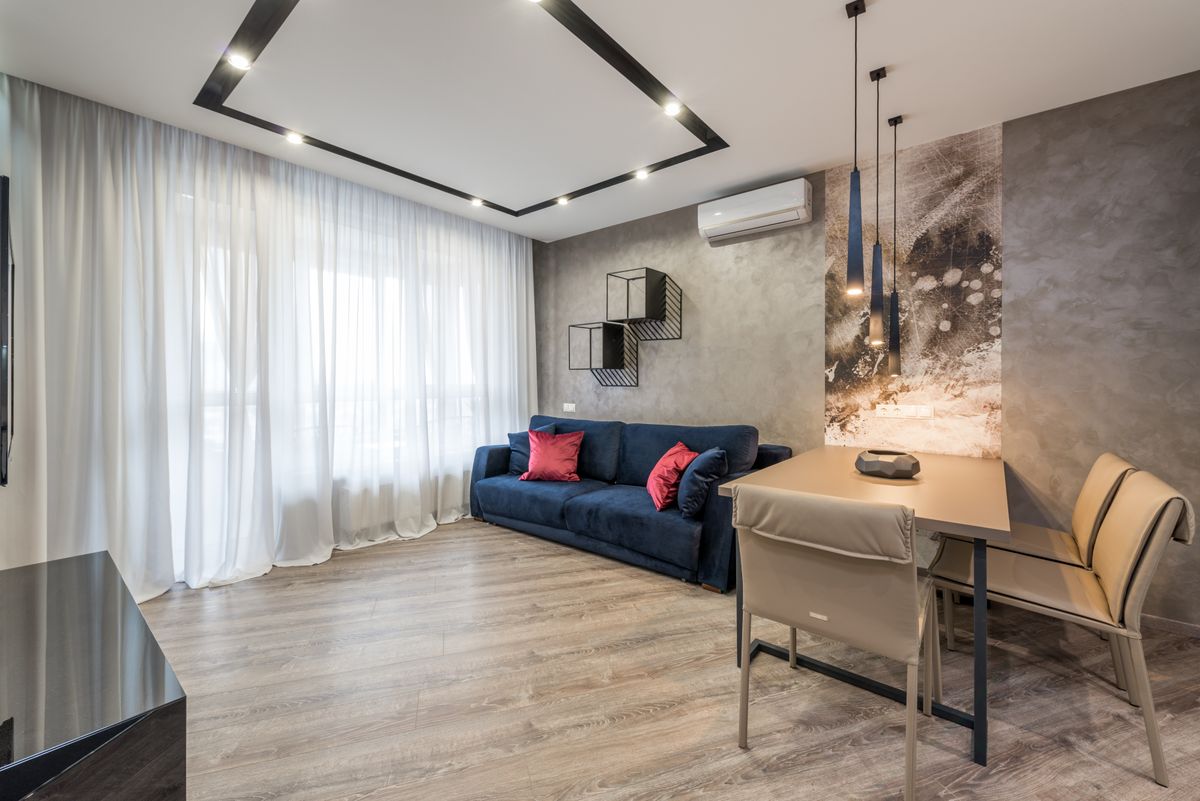
Use a rug or the direction of seating to group each area. The zones do not need equal sizes or equal quantities of furniture. If one is only used occasionally, it can remain lighter and more flexible. Keeping its boundaries loose may make the whole room easier to adapt.
Avoid a procession of objects
A series of small pieces along both walls can exaggerate the room’s length. Group some furniture and leave other surfaces open. A more substantial object at one end can give the eye a destination, but it should not block a window or door.
Notice heights as well. Repeated tall pieces can make the room feel narrower. Pairing low furniture with a clearer wall lets the eye travel through the space with fewer interruptions.
Test the room in use
Open drawers, extend the table and pull chairs out. The division must still work when people are present. If a zone only exists with everything tucked away, reduce the furniture or reconsider its function.
Lighting can support each activity with suitable controls. You should not need every light on for the room to make sense. Lighting individual areas is often more comfortable than trying to illuminate the full length at one uniform intensity.