Look at the room around it
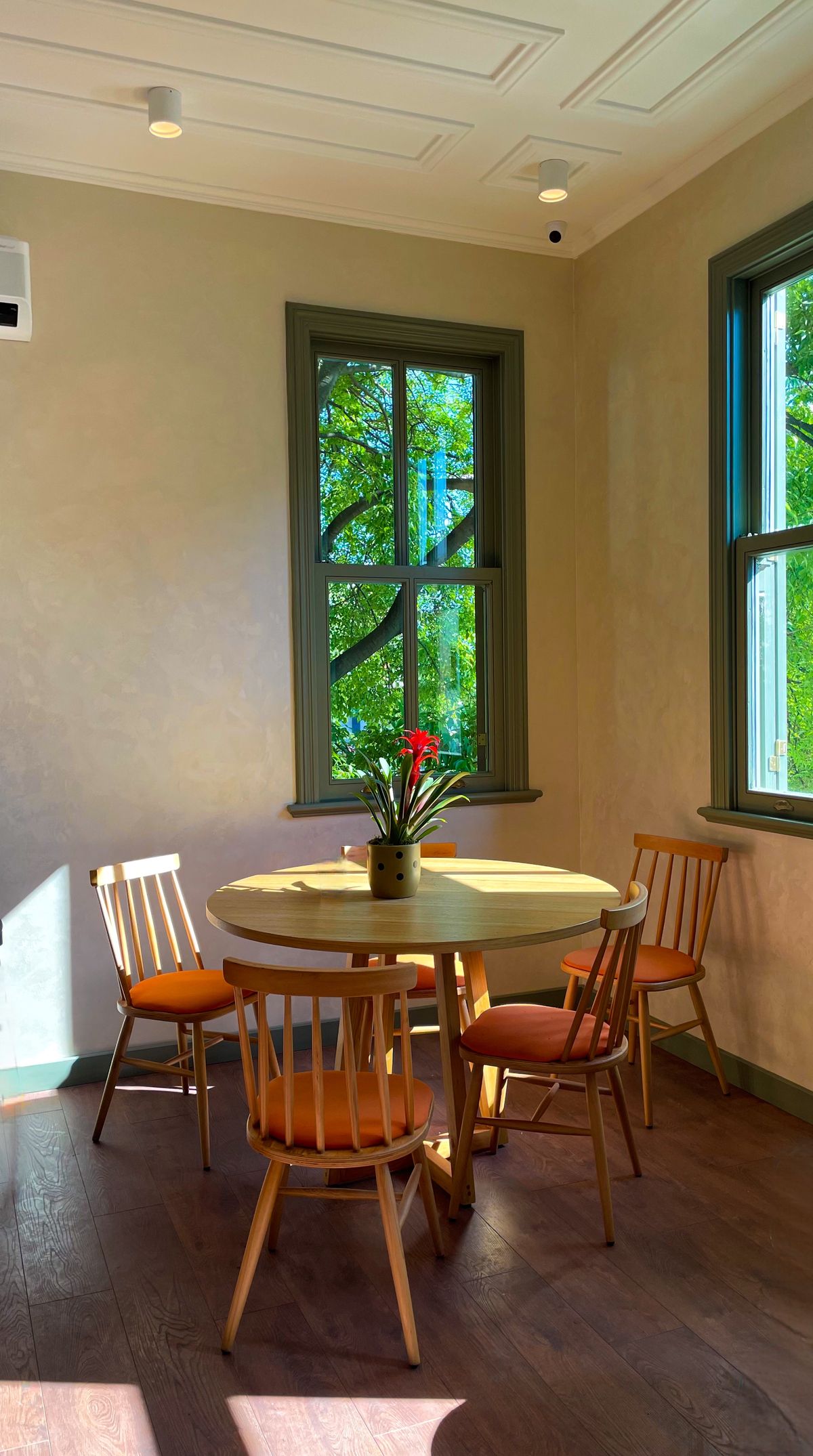
The absence of corners can soften a route past the table. However, a circle still has width in every direction. Mark its outline and position the chairs you will use, or similarly sized boxes, before assuming it fits.
Pay particular attention to access while someone is seated. A table that works with all chairs tucked in may block the kitchen during a meal. In a long, narrow area, a slim rectangular shape might use the available space better.
Test the actual places
Advertised seating capacity depends on the chairs and table settings. Arrange plates, glasses and a serving dish on an equivalent surface, or test in the shop if possible. Armrests can prevent chairs moving as close to the table as you expect.
A pedestal base frees some seating positions, but its foot still occupies space for people’s shoes. A table with several legs needs comfortable chair positions between them. Look beneath the top rather than judging only the outline from above.
Consider conversation and the centre
At moderate sizes, facing everyone can feel comfortable. As the diameter increases, reaching a serving dish in the middle may become harder. Decide whether you usually serve from the kitchen or share several dishes on the table; these are different uses.
If the table extends, inspect how its shape changes and where the legs end up. Check that you can store the leaves when they are not required. Operate the mechanism according to its instructions without forcing awkward movements.
Relate lighting to the table
A centred pendant can reinforce the arrangement, but there is no obligation to buy a circular shade. The important things are lighting the surface and keeping comfortable sightlines between people. Choose the table and its normal position before adjusting the lighting.
When deciding between two sizes, favour the one that supports sitting and circulation during everyday meals. Occasional visitors may call for a different arrangement, but they should not turn every ordinary dinner into a manoeuvre.