Separate everyday pairs
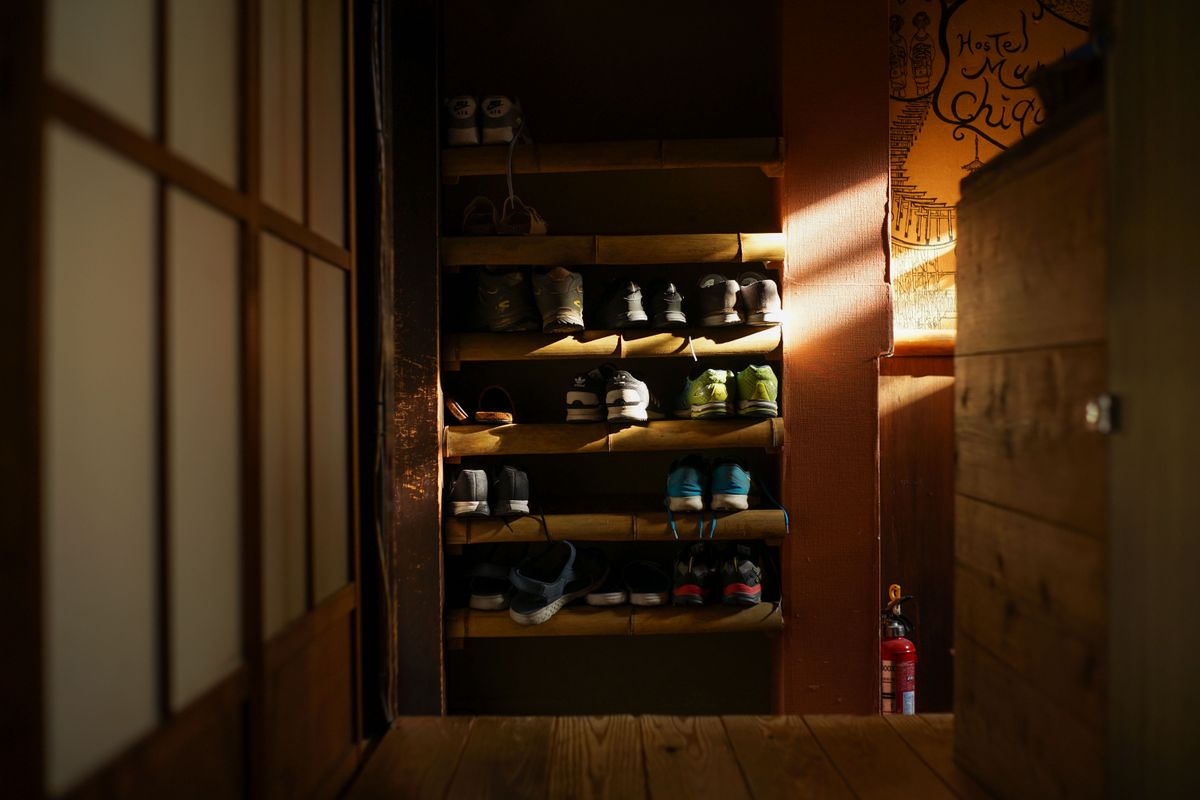
Watch which shoes remain on the floor during an ordinary week. Each person may need only two pairs close to the door. The rest can stay in another cupboard, clean and dry, without competing with trainers and work shoes for the space people use to walk through.
Agree on an amount that genuinely fits. Do not count only the compartments of an empty shoe cabinet. Test it with the tallest boots and largest pairs in the household. Some narrow units accept small shoes but leave larger ones crushed or permanently outside, creating the same problem the furniture was meant to solve.
Protect the entrance route
Check that the door opens fully and nobody needs to step over a tray to enter. Keep shoes away from exits, steps and regular walking routes. If you use a bench for putting shoes on, allow room to sit and stand, rather than merely enough space to push the furniture against the wall.
In a very narrow entrance, a low tray or small open shelf may be enough. Tilting shoe cabinets need space for their fronts to open. Tall furniture should be secured according to its manufacturer's instructions using fixings appropriate for the wall. The storage must remain steady when someone reaches for a pair.
Dry shoes before closing them away
Wet footwear needs a ventilated place to dry in accordance with its material and care instructions. A washable tray can catch drips, but empty and clean it rather than leaving shoes standing in collected water. Avoid drying them directly on a radiator unless their care instructions allow it.
Do not hide a damp pair in a closed box simply to clear the floor quickly. If wet shoes are a frequent issue, reserve a temporary drying spot beside their normal storage. That avoids improvising a trail of wet footwear through the house whenever the weather changes.
Make returning pairs straightforward
Keep regularly worn shoes at a height their owners can reach comfortably. Children may find an open compartment easier than a lidded box. Identify each person's area if pairs become mixed, but avoid such narrow divisions that a single boot cannot fit.
Review the collection when the season changes. Removing summer sandals in winter may create more useful space than buying another entrance cabinet.