Draw the room at night
Mark the full sleeping footprint, including any mechanism that opens forwards. Check where the doors end up and the route your guest will take to the bathroom. A bed that requires climbing over a coffee table turns an overnight stay into a balancing exercise.
Try that route with the lighting available at night. Provide somewhere reachable for glasses, a phone or a drink, plus room to put feet on the floor when getting up. Decide where a suitcase will go too; it tends to arrive just as the remaining clear floor has been occupied.
Check the actual transformation
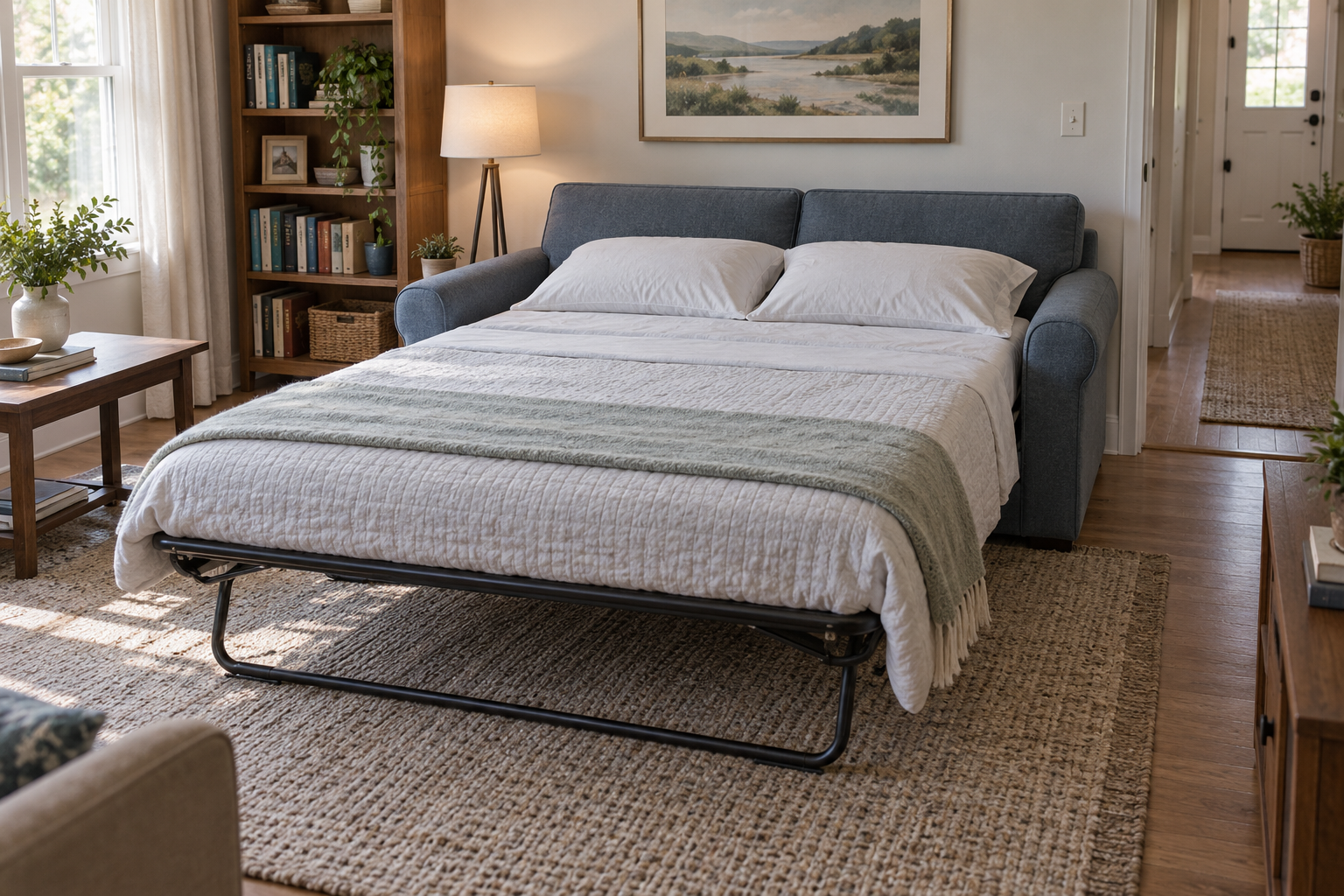
For a sofa bed, establish which cushions have to be removed and where they will stay. Some models must move away from the wall; others require lifting a heavy section. Try the opening process where possible and check that the person doing it can manage without straining or trapping fingers.
Do not judge only the seat's comfort. Look at the sleeping surface, its dimensions and the support it provides. If choosing a folding or inflatable mattress, confirm the intended use and follow the product's instructions for ventilation, inflation and storage.
Make space for bedding
A compact bed loses some of its advantage if blankets and pillows occupy an entire cupboard. Gather the complete bedding set and measure its volume before deciding where to store it. A labelled bag or basket keeps everything ready without mixing it into everyday linen.
Put items away clean and dry. After a visit, allow the mattress and bedding to air as appropriate for their materials before folding or enclosing them. Built-in storage is useful only if it holds what you need and remains straightforward to access.
Match the frequency of visits
For one very occasional night, temporarily rearranging existing furniture may be enough. When guests stay several days or return regularly, ease of opening and sleeping comfort deserve more weight. Consider the visitor's mobility needs as well, rather than assuming any low sleeping surface will suit everyone.