Check the whole movement
Open the window as you would for ventilation and cleaning. Notice whether it meets a chair back, lamp or boxes that have gradually accumulated on the sill. Check access to the handle too: stretching across furniture does not amount to having a readily accessible window.
Mark the space needed on the floor and wall. A hinged window needs a different clear area from a sliding one, and a tilt-and-turn design has more than one position. Test with curtains and blinds operating normally, rather than moved aside just to make the layout fit.
Keep the sill from becoming storage
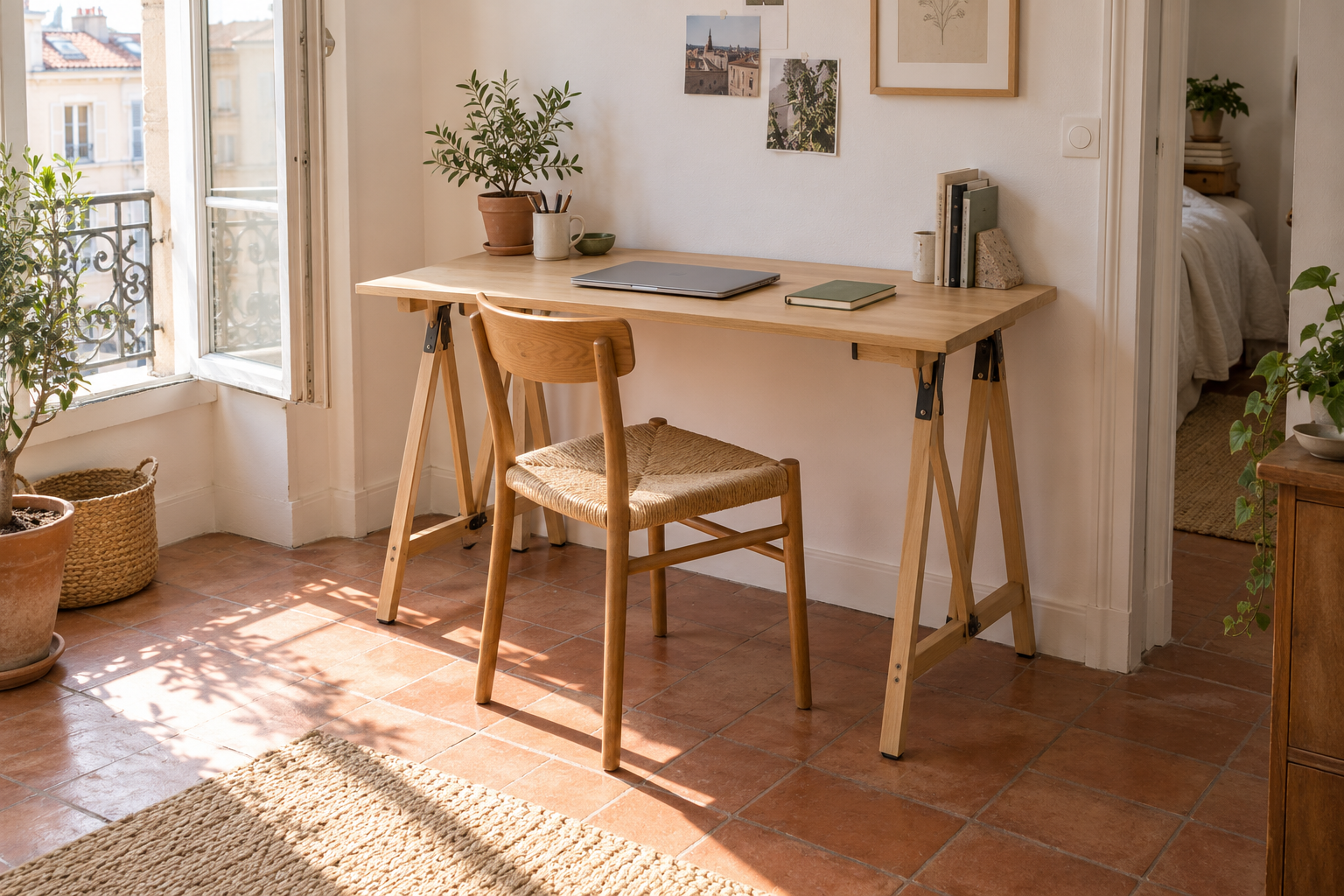
Select a few objects that are easy to remove for cleaning. Plant pots need suitable water protection, but should not prevent opening the window or inspecting its frame. If every airing requires moving an entire collection, reduce it or find another location.
Remove papers and sensitive objects from places exposed to damp or strong sunlight. Notice condensation and address its cause rather than hiding it behind decorations. Keeping the junction between frame and wall visible makes changes easier to spot and the area simpler to clean.
Consider furniture carefully
A low unit may seem a useful way to exploit the space, but its relationship with the opening matters. In homes with children, avoid placing climbable furniture where it provides access to a window. Insect screens are not reliable fall protection, and accessible blind cords also need attention.
Choose protective measures compatible with the window and the home's escape requirements. Do not block a necessary exit through an improvised solution. If unsure whether a device suits the installation, consult the installer or an appropriate professional before altering the fittings.
Preserve useful daylight
From the place where you read or work, check whether a nearby tall cupboard blocks an important part of the light. Moving it slightly or choosing another wall may help more than adding a lamp. The window area does not need to be empty of everything; it needs to keep performing its purpose.
Further reading: