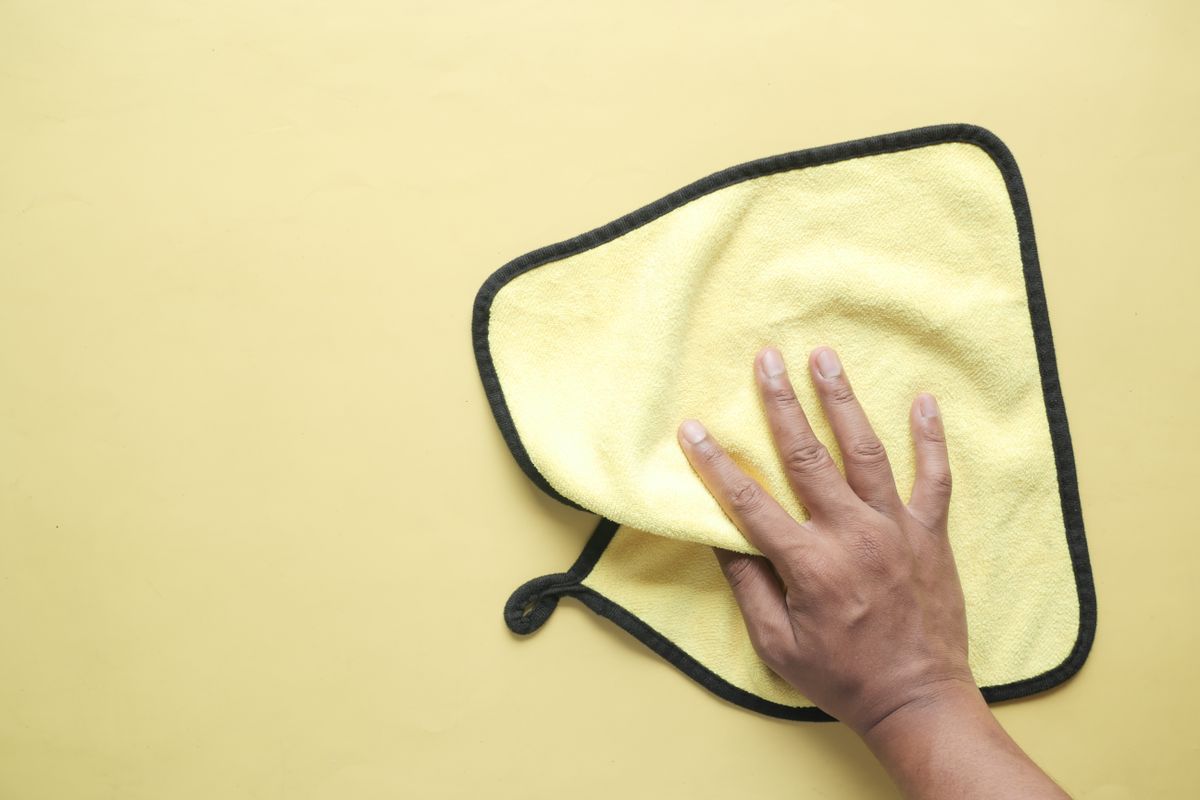
Give cloths memorable jobs
Reserve different cloths for bathrooms, kitchens and delicate surfaces. Colour works well when the system stays simple; you do not need a separate category for every piece of furniture. Keep cloths intended for screens or polished finishes apart from those collecting crumbs and grit. Open and inspect a cloth before use, checking for trapped particles. Microfibre does not make a grain of sand harmless: dragging it over a sensitive surface can scratch that surface even though the textile itself feels very soft.
Collect used cloths without trapping damp
Do not put a damp used cloth back in the clean drawer. If it will not be washed immediately, let it dry in a suitable separate place before gathering it for laundry. Several wet cloths inside a closed bag hold moisture and odours. Avoid leaving them on wood or a hot radiator. Keep cloths used for bathroom dirt away from food-preparation surfaces even while they are waiting to be washed. A clear used-cloth spot makes that separation easier for everyone sharing the home.
Let the label set the wash
Manufacturers do not necessarily specify the same temperature for every cloth. Follow the product and detergent instructions instead of assuming that boiling always improves the result. E-Cloth, for example, advises against fabric softener and dryer sheets for its products. Check the guidance for your own cloths. Softener can leave residues that interfere with their cleaning performance. Do not routinely add bleach where it is not permitted. The appropriate wash depends on both the textile and the material it has collected during use.
Keep lint out of the fibres
Washing microfibre beside fabrics that shed heavily can leave lint attached, which later appears on windows and mirrors. Group a compatible load without packing the drum tightly. Use the stated detergent dose for the actual load and allow thorough rinsing. If a cloth still feels greasy, investigate its wash rather than compensating with more cleaner on the furniture. A small load with too much detergent may require a corrected dose, not another fragrance. Check both washing and drying instructions before changing the routine.
Reassign worn cloths thoughtfully
A cloth that no longer leaves a mirror clear may still suit a less delicate task, provided it is clean and free from unsuitable residues. Do not move one that handled incompatible chemicals into dishwashing duty. Set aside damaged cloths that shed fibres or hold particles you cannot remove. Folding a clean cloth creates several working faces; switch faces before redistributing the dirt already collected. When finished, put a clean replacement where it will be needed, rather than building an elaborate storage system nobody follows.
Further reading: