Check for a coating
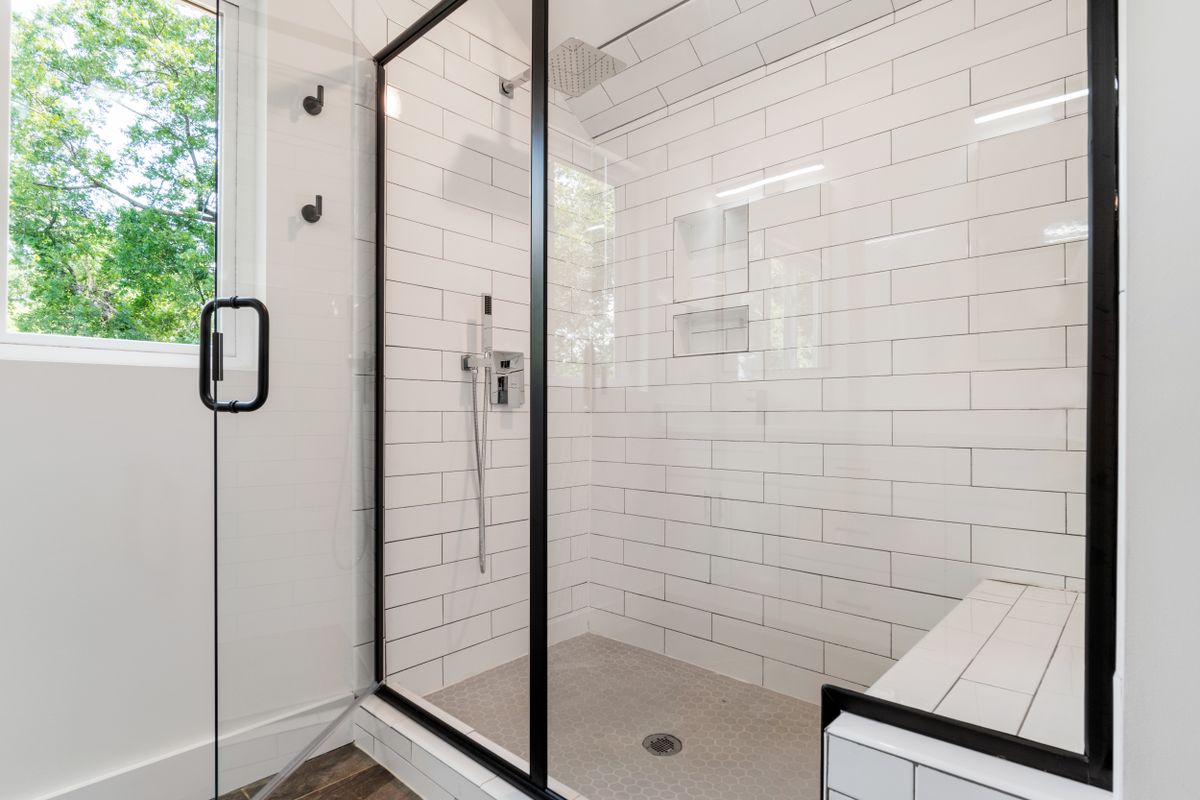
Shower screens may have easy-clean coatings as well as painted, plated or anodised frames. Find the model's instructions before buying a descaler. A transparent panel is not necessarily untreated glass. Note the material beneath it, too: a product tolerated by the panel may harm a natural-stone tray or floor. That combination matters more than the shine promised on the front of a bottle. If you cannot identify the coating, ask the supplier before trying an abrasive pad or an acidic household mixture.
A short pass after showering
Where it is practical, remove droplets with a clean rubber squeegee in good condition. Work without knocking the panel edges or fittings. Dry accessible areas where water tends to collect, such as the lower edge, and leave the tool somewhere it can drain without falling. Keeping this task short makes it easier to repeat than waiting for the entire screen to need a long cleaning session. You do not need to chase every droplet or dismantle the enclosure to make a useful improvement.
Clean one panel at a time
Once the screen is cool, apply its compatible cleaner in the specified way and observe the contact time. Do not let it dry while you clean another room. Use the soft cloth or tool approved by the manufacturer, rinse thoroughly and judge the result once the glass is dry. Working panel by panel stops the first area receiving an unnecessarily long treatment. A dedicated cloth also reduces the chance of bringing grit or grease from a kitchen surface onto the screen.
Treat edges precisely
Remove accessible loose debris from tracks and joins without taking the screen apart. Do not push blades, wire or pointed tools into seals, and do not peel away sealant because it resembles a dirty deposit. If an area remains wet, look for an obvious blocked drainage opening or a door that does not close correctly. Repeated leaks and damaged seals call for an installation check. More cleaner cannot fix water escaping towards nearby materials or compensate for a fitting that has come loose.
Not every mark is limescale
A soap film, a scratch and a mineral deposit can look similar in certain light. If the usual method does not change the mark, do not automatically scrub harder or combine products. Vinegar is not a universal answer, particularly beside stone, sensitive metal finishes or protective coatings. Ask the manufacturer about persistent cloudiness or an unidentified treatment. When the job is finished, ventilate the bathroom as appropriate and let the tools dry. Clean equipment makes the next session less likely to leave new streaks.