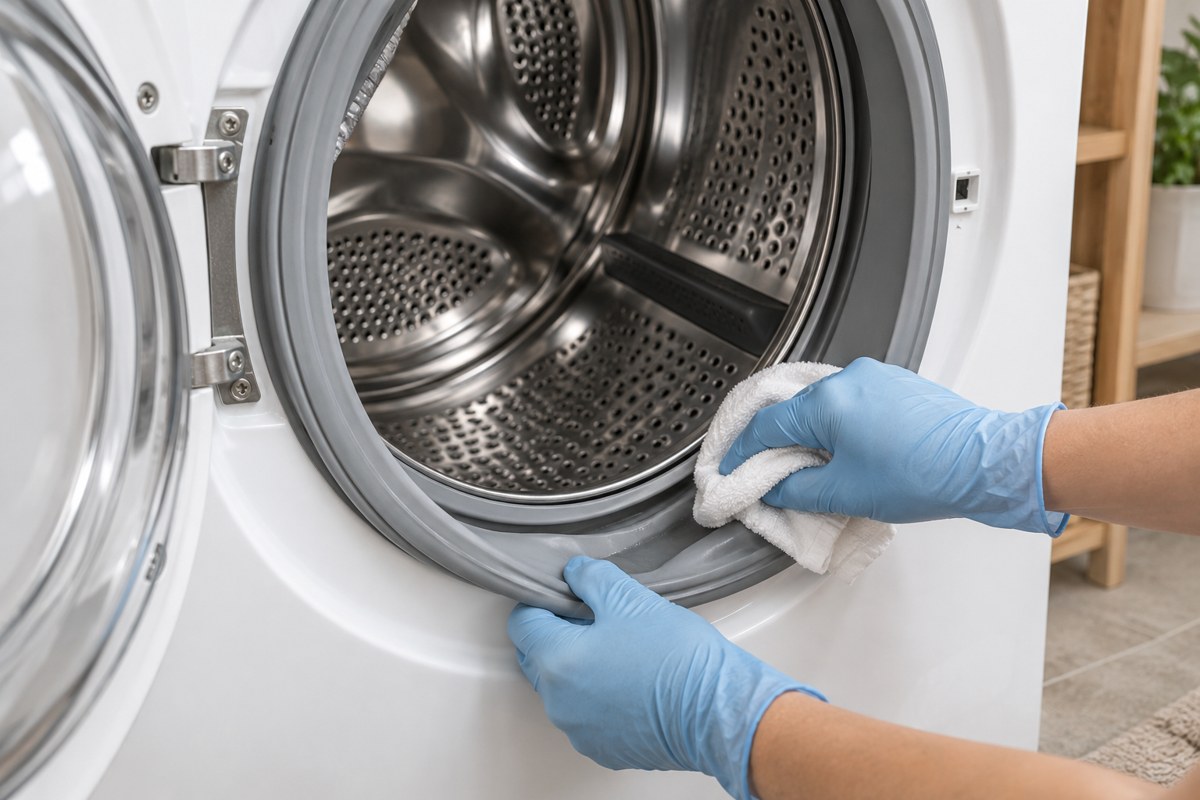
Wait until the cycle is finished
Empty the drum, switch off the machine and follow the model instructions before working. Make sure there is no remaining hot water or movement. The seal is not a handle; do not pull hard to create more access. With good lighting, inspect the accessible fold for small objects, threads and detergent residue. Check clothing pockets before future washes to reduce what ends up there. A trapped coin needs careful removal by an authorised method, not another cleaning cycle in the hope that it disappears.
Use a soft cloth within reach
Bosch specifies a cloth and warm water for its seals, avoiding aggressive products that can harm rubber. Consult the method for your washer and work only within accessible areas. Ease a fold aside gently where intended, without removing retaining rings or clamps. Do not insert screwdrivers or metal brushes to reach further inside. Turn the cloth to a clean section as it collects dirt. The aim is to remove surface residue, not change the shape of a component that must seal during every wash.
Dry the area afterwards
Finish with a dry cloth, paying attention to the lower edge where droplets collect. If the manual recommends leaving the door ajar, do so only where children and pets cannot access it and it does not obstruct a walkway. An open door does not replace removing visible residue. Avoid leaving wet laundry inside for a long period after a cycle. Taking it out promptly creates an opportunity to check the seal and prepare the machine for its next use, rather than discovering damp items much later.
Distinguish staining from damage
A dark mark alone does not establish that the rubber has failed, but a cut, distortion or detached edge deserves inspection. Do not combine bleach, vinegar or other products in an attempt to whiten it. If the authorised method leaves a mark or odour returns, contact the manufacturer. Note whether water escapes, when it appears and which part of the doorway is affected. Those observations help diagnosis more than increasingly forceful cleaning that never identifies the actual source of the problem.
Review the wash routine too
Use the detergent dose appropriate to the load, soiling and water conditions, following both detergent and appliance instructions. More foam does not mean better maintenance. A drum-cleaning programme, where provided, has its own procedure and does not replace checking the rubber. Maintain the dispenser according to the manual as well, instead of attributing every smell to the seal. For a leak, stop using the appliance where appropriate and seek assistance. Drying the floor after every wash is not a repair to the door closure.
Further reading: