Check cooling and available space
Read the manual to understand the compartments and keep air outlets clear. Do not fill every gap with boxes that obstruct circulation. A suitable thermometer helps check the actual temperature; the number on a control dial may indicate a setting rather than degrees. The Food Standards Agency recommends keeping a fridge at 5°C or below.
Rearrange it promptly instead of leaving chilled food on the counter while organising the entire kitchen. Work shelf by shelf and return each group quickly. Clean spills according to the appliance instructions before placing food over them. Storage accessories should not make routine cleaning harder or conceal liquid beneath their bases.
Separate raw and ready-to-eat food
Keep raw meat, fish and poultry in their packaging or sealed containers in the appropriate lower area, so they cannot drip onto other food. Keep ready-to-eat products separate. If the appliance has specialised compartments, check how they should be used rather than guessing their purpose from their size.
Vegetables need room without being crushed beneath heavy containers. Avoid treating the produce drawer as the destination for anything that does not fit elsewhere. When you remove one bag, you should be able to see what remains below without emptying the entire compartment or leaving the door open for a long search.
Make opened products visible
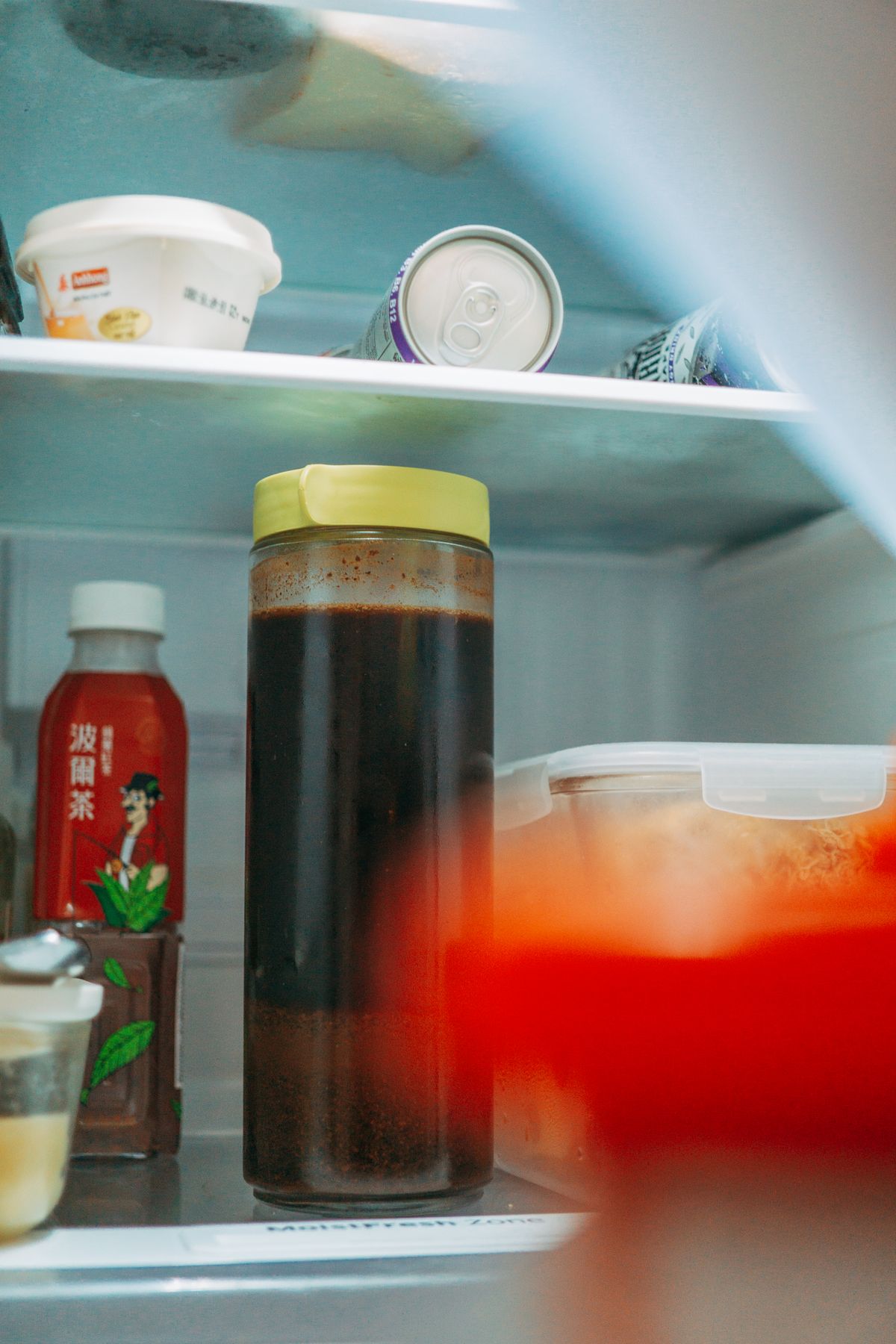
Gather opened products with compatible storage requirements in an easy-to-review area. A small tray can remind you about yoghurt or a sauce, but should not mix raw ingredients with prepared foods or override use-by dates. Keep the original information readable even when the food sits inside another organiser.
Mark the opening date when a label specifies a period for use after opening. Retain that instruction: opened on Monday is not enough if nobody remembers how long the product allows. Transparent containers help, although a clear label matters more when two prepared dishes look similar from above.
Review before shopping
Look inside while writing the shopping list. Plan around food that can still be used safely and remove anything unsuitable. Do not taste food to decide whether it is safe, or rely only on smell once a use-by date has passed.
Leave reasonable space for the next shop. If every addition requires moving ten containers, simplify the groups and remove accessories that occupy more space than they organise.
Further reading: